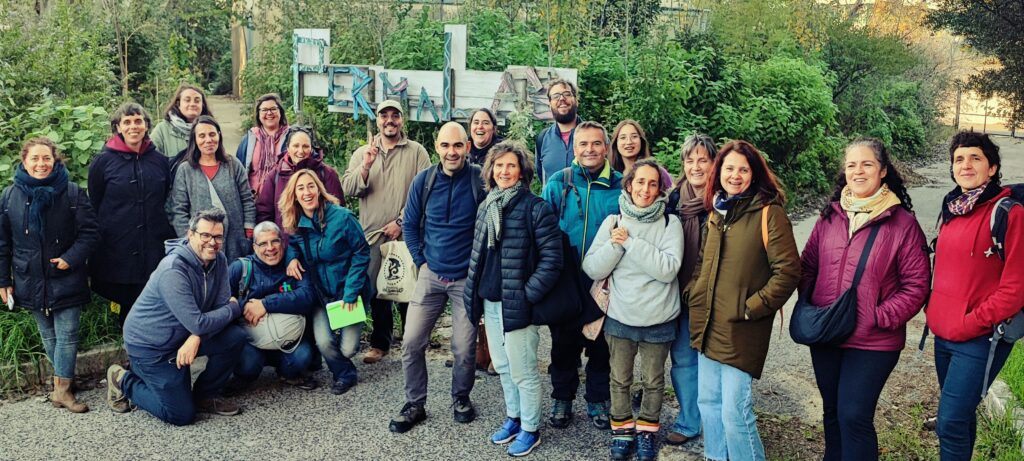
The Ecoprise course is the first international MOOC created to prepare students, trainers, professionals, entrepreneurs, and organisations to innovate with the skills necessary for the design and development of regenerative and sustainable projects. As part of its first edition, study visits to leading initiatives began in November and December 2025, allowing participants to observe the practical application of the content studied in the field.
Horta FCUL: a living laboratory for permaculture and eco-social collaboration
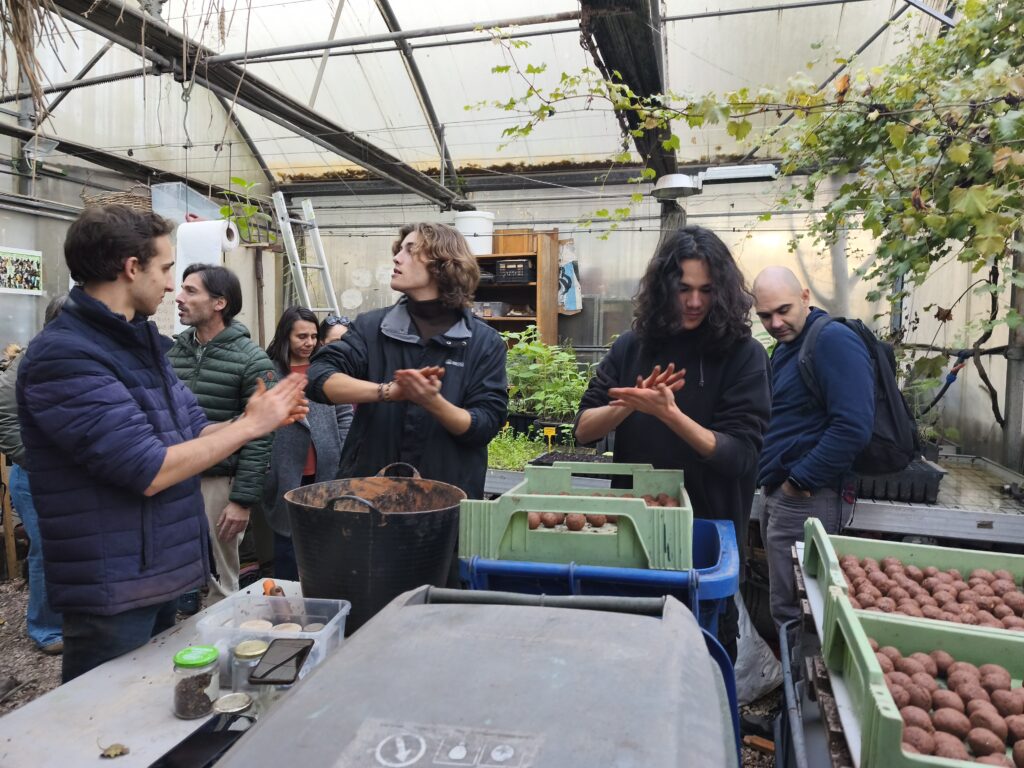
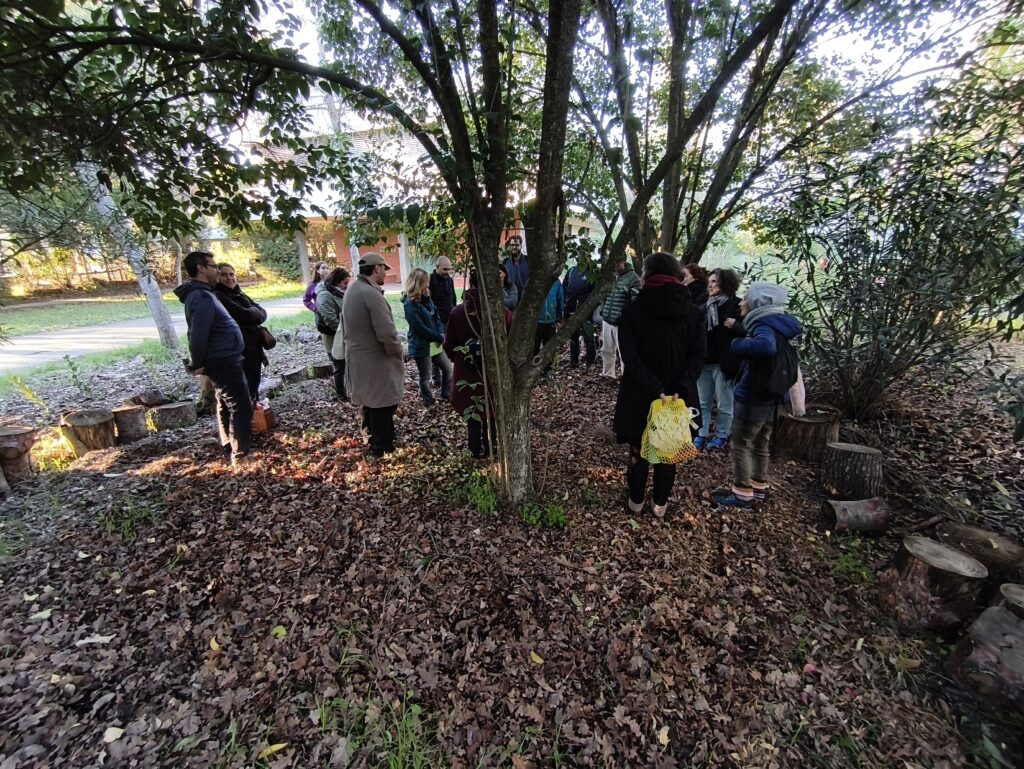
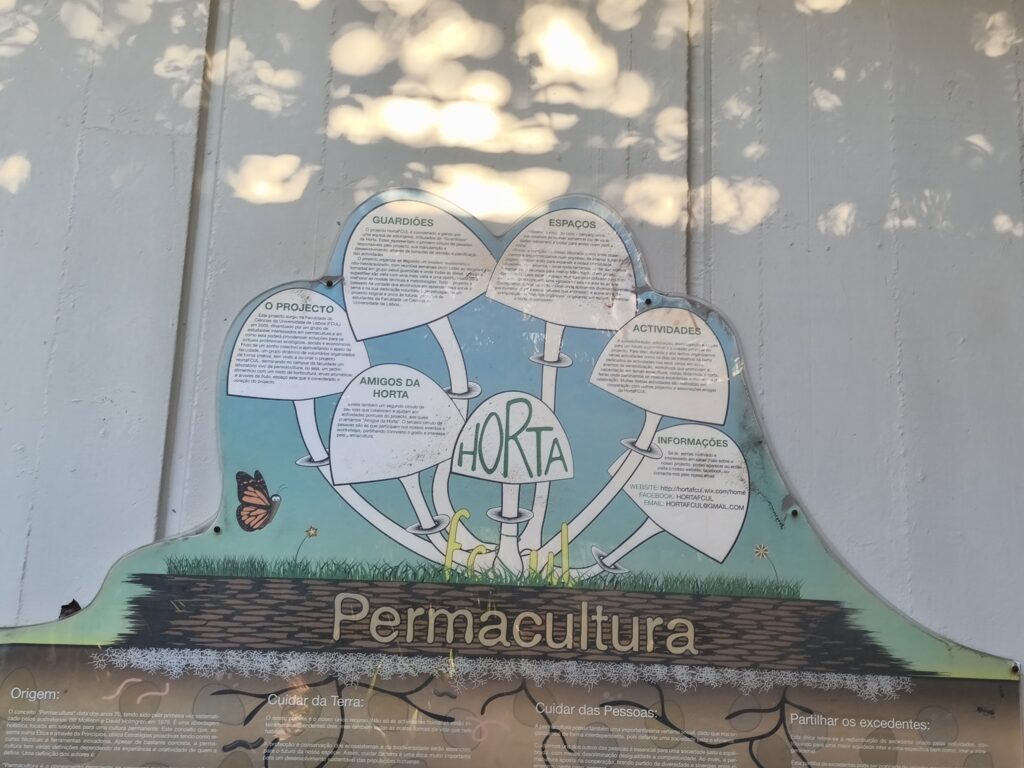
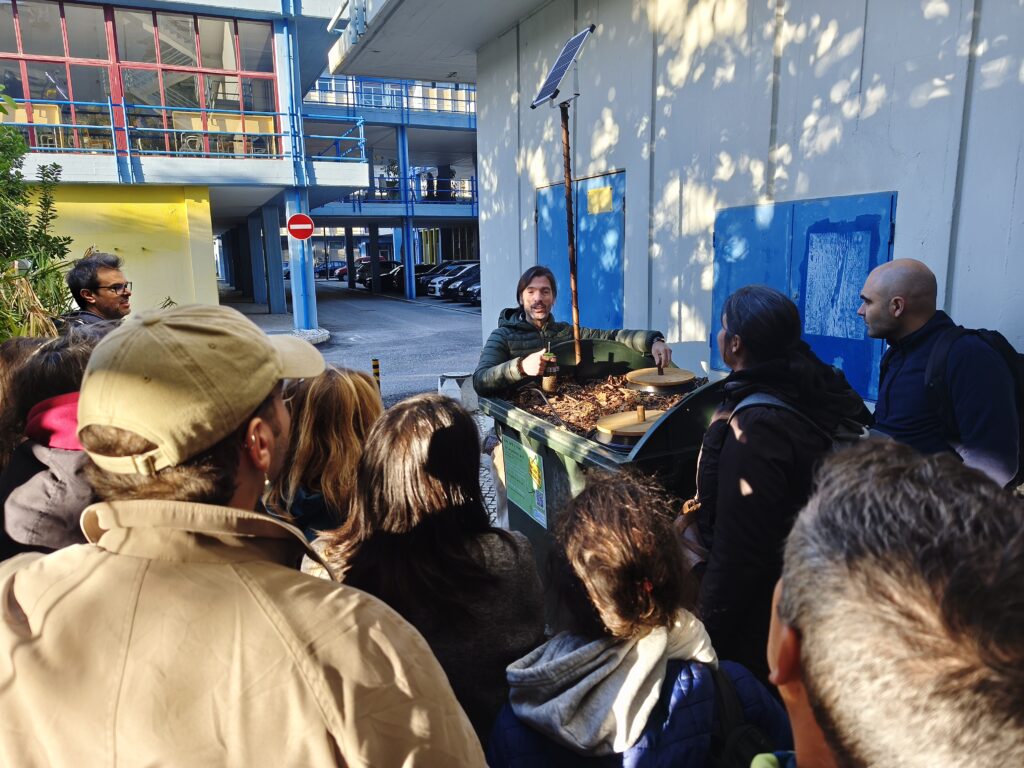
The first visit took place on 20 November 2025 at Horta FCUL, a consolidated example of ecological, social and economic innovation. Since 2009, this project has been developing permaculture activities within the Faculty of Sciences of the University of Lisbon, integrating theory and practice while bringing together volunteers, students, teachers and permaculturists from different areas.
Horta FCUL stands out for its ability to create a collaborative ecosystem, restore ecological spaces and promote a culture of social innovation. The location functions as a dynamic laboratory where scientific solutions are applied and monitored, including the use of sensors and practical classes taught by biology and ecology lecturers. For Ecoprise students, the visit allowed them to directly observe the application of the contents of modules 0, 2, 3 and 4 of the course.
Rizoma Cooperative: organisation, governance and alternative economic models
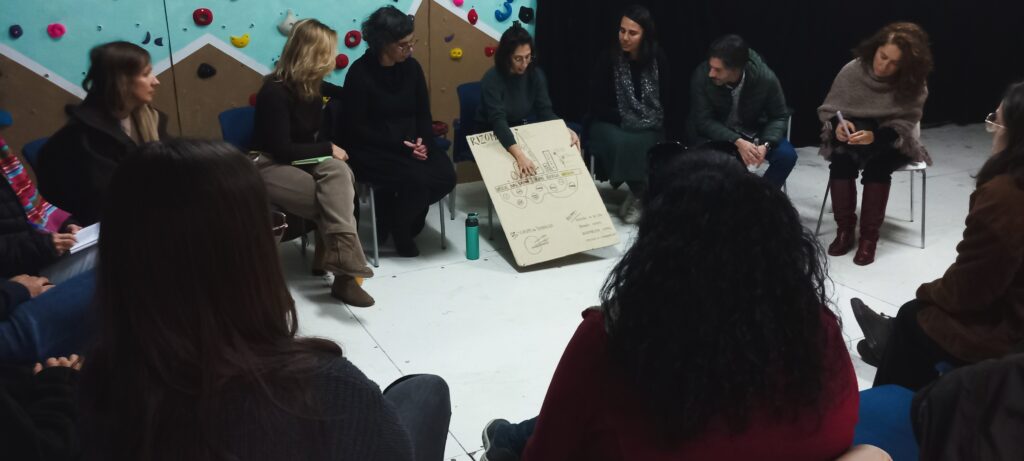
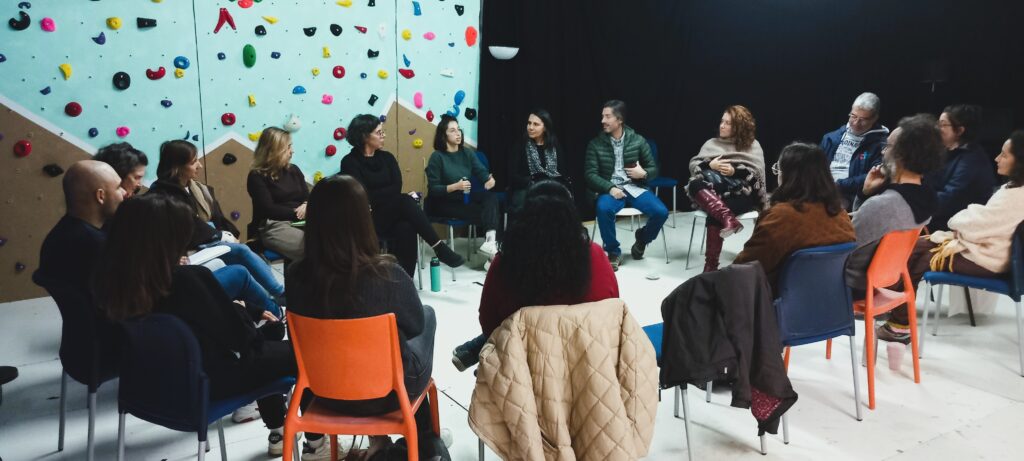
The second visit took place on 4 December 2025, at the Rizoma Cooperative. The session began with some context on the relevance of the visit within the course, followed by a presentation on the history of the cooperative, its objectives and the challenges it faced in its early years.
During the session, participants explored key topics such as the cooperative’s organisational structure, the legal basis that differentiates it from conventional business models and non-profit associations, horizontal and collaborative decision-making processes, and the economic functioning of the cooperative model. There was also time to discuss issues of replicability, future challenges and questions raised by participants.
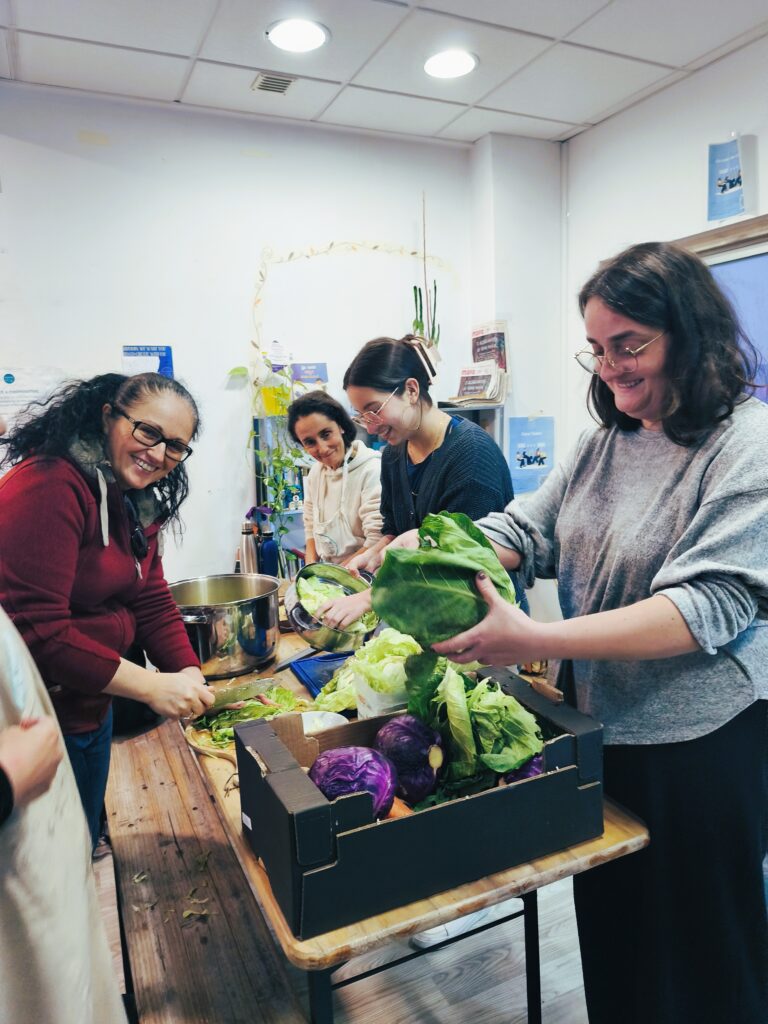
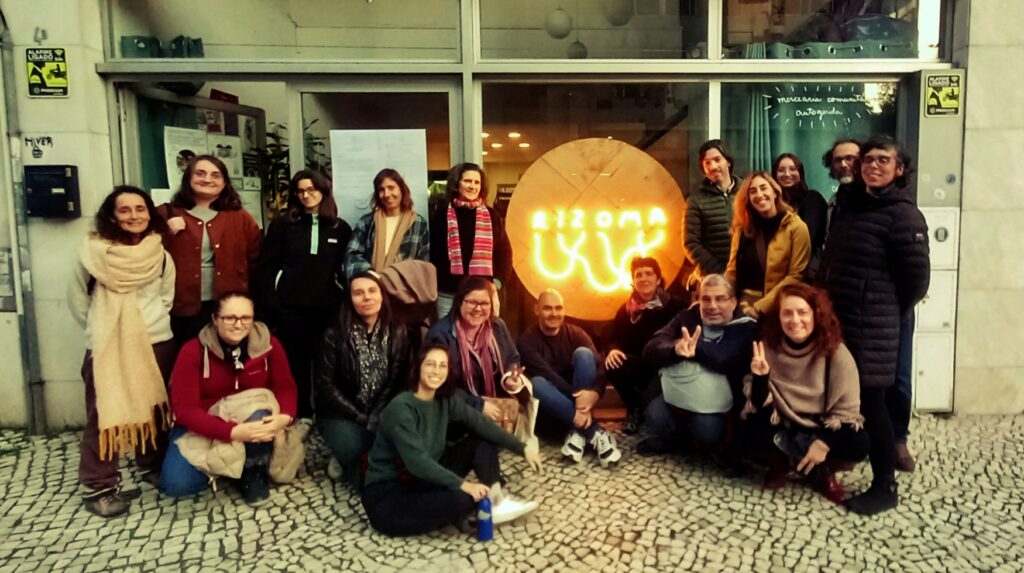
This was followed by a guided tour of Rizoma’s various collaborative spaces, followed by the integration of the Ecoprise group in helping to prepare the social dinner with other members – representing the strong collaborative and social component of the cooperative, which culminated in an informal get-together between everyone, marking the end of the activity and a group photo. Participants had the option of staying for the Cooperative’s end-of-day activities, such as an information and debate session on changes to the Labour Package and the Social Dinner at Rizoma with cooperative members.